
Home / Blogs / Why do FDs Struggle with Finance Reporting Confidence?
Why do FDs Struggle with Finance Reporting Confidence?

Have you ever felt that split second of doubt in a boardroom before answering a question about a number on the screen — the pause where you’re asking yourself “can I fully trust these numbers?” That hesitation sits at the heart of finance reporting confidence, and for many manufacturing finance teams it’s still unresolved.
What is finance reporting confidence (and why does it matter)?
Finance reporting confidence is the ability to stand behind your numbers without hesitation, explain where they come from and defend them under scrutiny. It comes from knowing how a number was calculated, being able to trace it back to source, trusting that nothing has been missed, duplicated or overwritten, and being able to explain it quickly when challenged. Without it, reporting becomes reactive instead of strategic.
Why do Finance Directors struggle with it?
You’ve got an ERP system, Power BI dashboards and a capable team — so why is confidence still fragile?
Fragmented data
Most manufacturers don’t operate in a single clean system. Data sits across ERP systems, Excel workbooks, operational systems and acquired or legacy systems. To get to one number, your team exports data, adjusts it manually, reconciles inconsistencies and combines multiple sources — and every step introduces risk. Even if the final number is correct, the journey to get there is unclear.
Manual work
There’s a hidden layer in most teams: the spreadsheets behind the spreadsheets, the files only one person really understands. If the answer to “what’s driving the margin drop?” lives across three spreadsheets and someone’s memory, your confidence is already compromised — even if the answer exists.
Lack of visibility
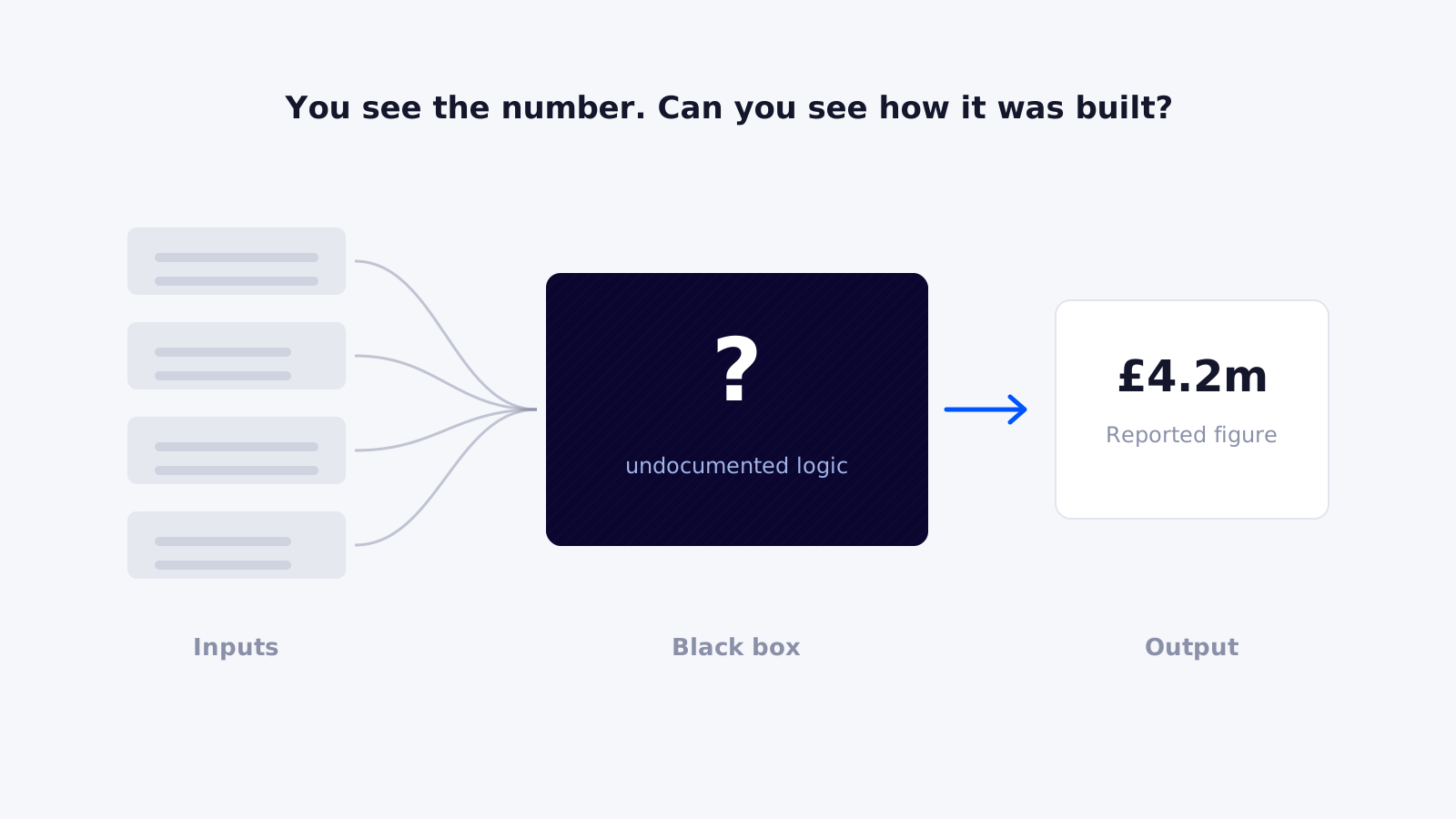
The “black box” problem: you see the final number, but you can’t clearly see how it was built, what assumptions were applied or where adjustments were made. So when someone asks why, you don’t have a straight line from result to source.
What does this look like in real life?
The delayed board answer
Revenue is up but margins are down. The CEO asks what’s driving the drop. The answer is somewhere in FX, raw-material costs and inventory timing — but confirming it means checking three files, validating adjustments and cross-referencing with operations. So the FD says “I’ll come back to you on that,” and comes across as unprepared (which is far from the truth).
The reconciliation spiral
A controller spends two days reconciling ERP outputs, Excel reports and management packs. Everything should match — but it doesn’t. By the time the numbers are “ready,” the focus has shifted from insight to validation.
The key-person dependency
When one person owns a spreadsheet only they understand, they become a dependency rather than an asset. When they’re on leave, processes slow down — and if they leave the business, it’s a direct threat to reporting continuity.
Why does this hit manufacturing harder?
Manufacturing finance isn’t simple: inventory valuation timing, cost of goods sold, multi-entity structures, intercompany transactions and operational data that doesn’t align neatly with finance. The reporting challenge is operational and financial combined — and that complexity amplifies any weakness in your process.
How can you improve finance reporting confidence?
Reduce manual dependency
Identify where your team is exporting data, manually adjusting numbers and reconciling across systems — those are your biggest risk points. Fewer steps means fewer unknowns.
Create a single version of the truth
Replace multiple spreadsheets and versions with one governed data model, standardised logic and consistent definitions across reports — eliminating conflicting numbers.
Improve visibility and traceability
You should be able to click into a number, see what’s driving it and trace it back to source. Real confidence looks like instant clarity.
Shift from reporting to insight
When your team spends less time checking data, fixing errors and rebuilding reports, they spend more time analysing trends, explaining drivers and supporting decisions — and finance becomes strategic, not just operational.
What’s the real cost of low confidence?
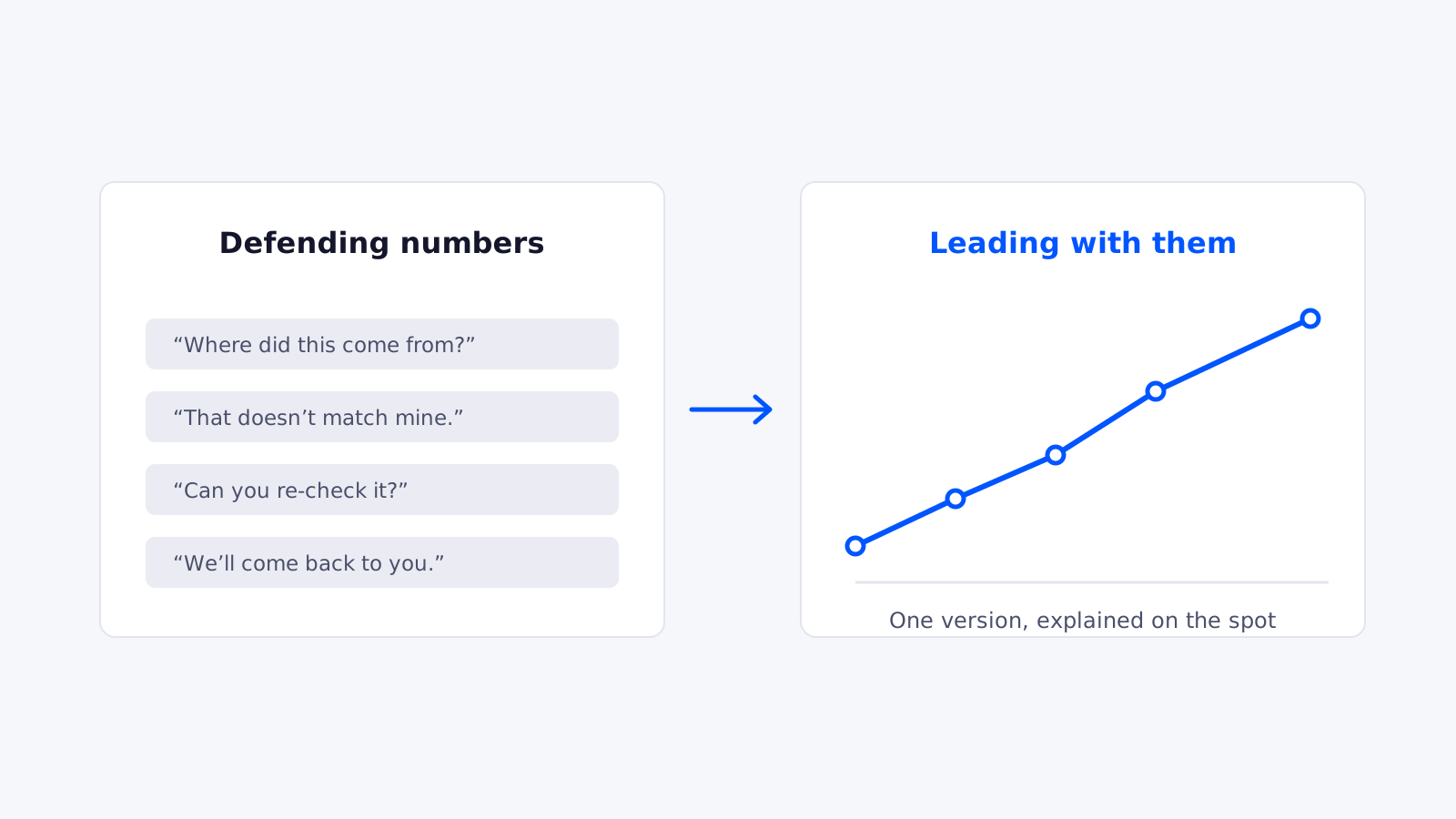
It’s not just about numbers. It affects your credibility in leadership meetings, the speed of decision-making, the morale of your team and your ability to forecast accurately — shifting finance from a position of authority to a position of defence.
Key takeaways
- Confidence is about visibility and control, not effort.
- Manual processes and fragmented data are the biggest threats.
- Improving traceability, automation and data structure restores trust in your numbers.
FAQs
What is finance reporting confidence?
The ability to trust and explain financial data without hesitation, supported by transparent, traceable reporting.
Why do Finance Directors struggle with it?
Because data is often fragmented across systems, manually adjusted in spreadsheets and difficult to trace back to source.
How does automation improve it?
Automation reduces errors, standardises processes and ensures data is consistent, traceable and reliable across reports.
Ready to trust your numbers again?
Book a free 30-minute call and we’ll talk through your current reporting and what’s possible.