
Home / Blogs / How to Spot If Your ERP Migration Has Left a Reporting Gap
How to Spot If Your ERP Migration Has Left a Reporting Gap

With the ERP migration supposedly complete, why are some finance teams still exporting everything into Excel every month-end?
If your team is still manually shifting data to Excel to actually understand it… you’re not alone. Many ERP projects solve the transaction problem, not the reporting problem — and in manufacturing finance, those are two very different things.
Why do ERP migrations still leave finance teams in Excel?
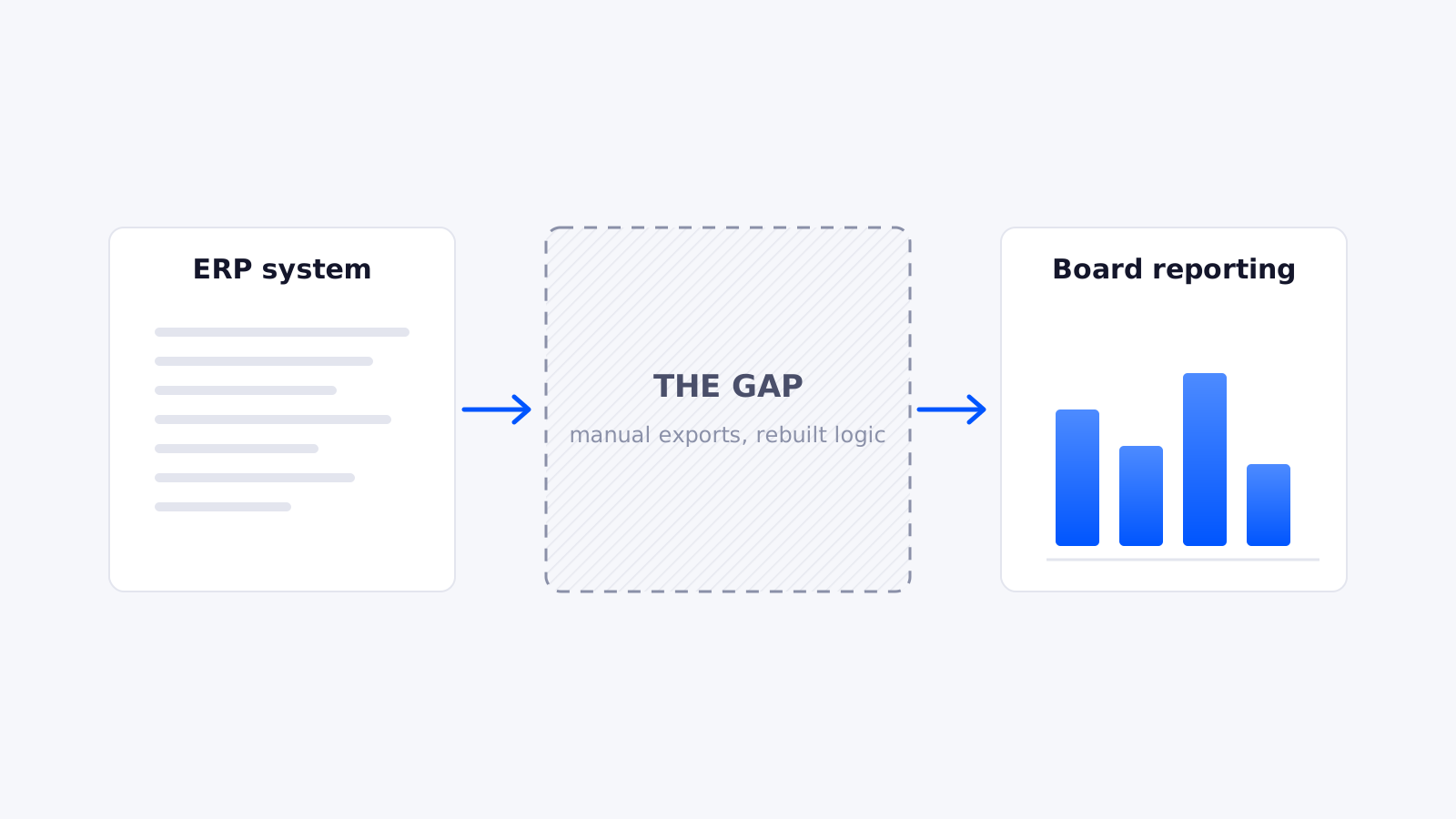
A reporting gap appears when the ERP can successfully process transactions, but finance still cannot produce the visibility, analysis, traceability and reporting flexibility leadership actually needs. The result: finance teams continue building manual workarounds after the migration supposedly solved the issue. That is why many Finance Directors feel disappointed after ERP projects — the system works, but reporting still feels painful.
What is a reporting gap?
A reporting gap is the space between what the ERP can technically produce and what finance teams need to explain performance confidently. In manufacturing businesses, this gap often appears in:
- Intercompany eliminations
- Multi-entity consolidation
- FX reporting
- Margin analysis
- Inventory valuation
- Cost allocation models
- Forecast variance analysis
- Operational reporting
The ERP contains the data, yet the reporting logic still lives somewhere else — usually in Excel files, Power Query workbooks, offline mapping tables, manual journals, consolidation spreadsheets and shadow reporting processes. That is the reporting gap.
How do ERP reporting gaps happen?
Most ERP projects are designed around operational continuity. The primary objective is usually to get transactions flowing, minimise disruption, complete the cutover and stabilise operations. Reporting is assumed to be solved automatically.
But financial reporting is not just about extracting numbers. It is about explaining why performance changed, what is driving variance, which operational factors matter, how entities interact and what risks are emerging. That logic rarely comes “out of the box.” So finance compensates — and once finance starts compensating manually, the reporting gap begins growing.
What does a reporting gap look like in manufacturing finance?
Example: multi-entity acquisitions
A manufacturing group acquires a new subsidiary. The parent company uses Dynamics 365 Business Central; the acquired business runs SAP. Both use different charts of accounts and structure cost centres differently. The migration standardised some operational processes, but group reporting still requires manual mapping tables, offline consolidation, spreadsheet adjustments and FX bridging files. Technically the migration succeeded; operationally, finance still feels fragmented.
Example: inventory reporting complexity
A manufacturer wants to understand why gross margin fell during the quarter. Was it commodity pricing? Freight increases? FX exposure? Operational inefficiency? Inventory timing? The ERP may contain all the raw data, but the finance team still exports into Excel to explain the story behind the movement. Again, the reporting gap appears.
How can finance leaders spot a reporting gap?
- Month-end close has not improved meaningfully. If finance still spends days preparing reports manually, the reporting layer has not been modernised.
- Finance still uses offline mapping tables. If someone still needs to “translate” ERP outputs into board-level reporting, the gap exists.
- Drill-down reporting stops too early. If dashboards cannot explain what sits behind the numbers, finance still lacks visibility.
- New acquisitions create reporting chaos. Every new entity should not require another set of spreadsheet workarounds.
- Key-person dependency still exists. If reporting slows down when one person is absent, the process is still fragile.
Why are reporting gaps so dangerous?
Inefficiency is a big issue, but for finance leaders, loss of confidence is even more dangerous. When reporting depends on manual intervention, errors become harder to spot, audit trails weaken, board-level explanations slow down, teams lose time validating numbers and forecast credibility suffers. Eventually even strong teams start second-guessing outputs — and hesitation matters in high-pressure board environments.
How can manufacturing finance teams close the reporting gap?
The solution is not another ERP implementation. The way to fill this gap is to strengthen the current reporting layer, allowing the team to focus on strategy and analysis:
- Automated consolidation — removing manual entity-level stitching.
- Centralised data logic — one governed reporting framework across the organisation.
- Transparent drill-down capability — move from summary dashboards to source transactions instantly.
The strongest reporting environments are designed around finance logic, variance analysis, board questions and operational visibility — not just technical system structure.
What does good reporting look like after ERP migration?
Strong reporting environments allow finance teams to explain margin movements immediately, separate FX impact from operational performance, consolidate entities automatically, trust the numbers without rebuilding logic manually and reduce month-end pressure significantly. More importantly, finance spends more time analysing performance than preparing reports. That should be your benchmark of transformation.
FAQ: ERP reporting gaps
Why do ERP migrations fail to improve reporting?
Because many projects prioritise transaction processing and operational continuity rather than finance reporting logic.
What is a reporting gap in finance?
The disconnect between ERP data and the reporting visibility finance teams actually need.
Why are finance teams still using Excel after ERP migration?
Because reporting complexity often remains unresolved after implementation.
How can finance improve post-ERP reporting?
Through automated consolidation, governed reporting environments and finance-led dashboard design.
Quick summary
- ERP migrations often solve transaction processing more effectively than finance reporting.
- Reporting gaps appear when finance still relies on manual workarounds.
- Common warning signs include offline mapping tables and slow month-end closes.
- Manufacturing complexity makes reporting gaps harder to eliminate.
- Strong reporting environments focus on traceability, drill-down and finance-led logic.
Ready to trust your numbers again?
Book a free 30-minute call and we’ll talk through your current reporting and what’s possible.