
Home / Blogs / Are you Losing 100+ Hours a Year to Manual Financial Processes?
Are you Losing 100+ Hours a Year to Manual Financial Processes?

The first answer for a lot of teams we’ve worked with is usually, “That’s just how long our month-end takes.” But if you look closely, you’ll see a lot of time unaccounted for — spent on validation, fixing errors, reconciling numbers or other avoidable manual tasks. Before you know it, your team has lost over 15 hours a week during month-end. Welcome to the hidden cost of manual finance processes.
What are manual finance processes?
Manual finance processes are repetitive, human-driven tasks involved in reporting, reconciliation and data preparation — data entry, spreadsheet reconciliation, manual adjustments and report building. And they’re quietly draining your team’s time.
Where does time get lost?
Reconciliations
Reconciling data across systems takes hours — especially when numbers don’t match, which is common when systems don’t talk to each other as they should.
Mapping and adjustments
Manual mappings need constant updates, create inconsistencies and require validation — all of which add up.
Inconsistencies and rework
Different reports show different numbers, so teams recheck data, rebuild reports and revalidate outputs. Time spent here adds up fast.
What does this look like in real life?
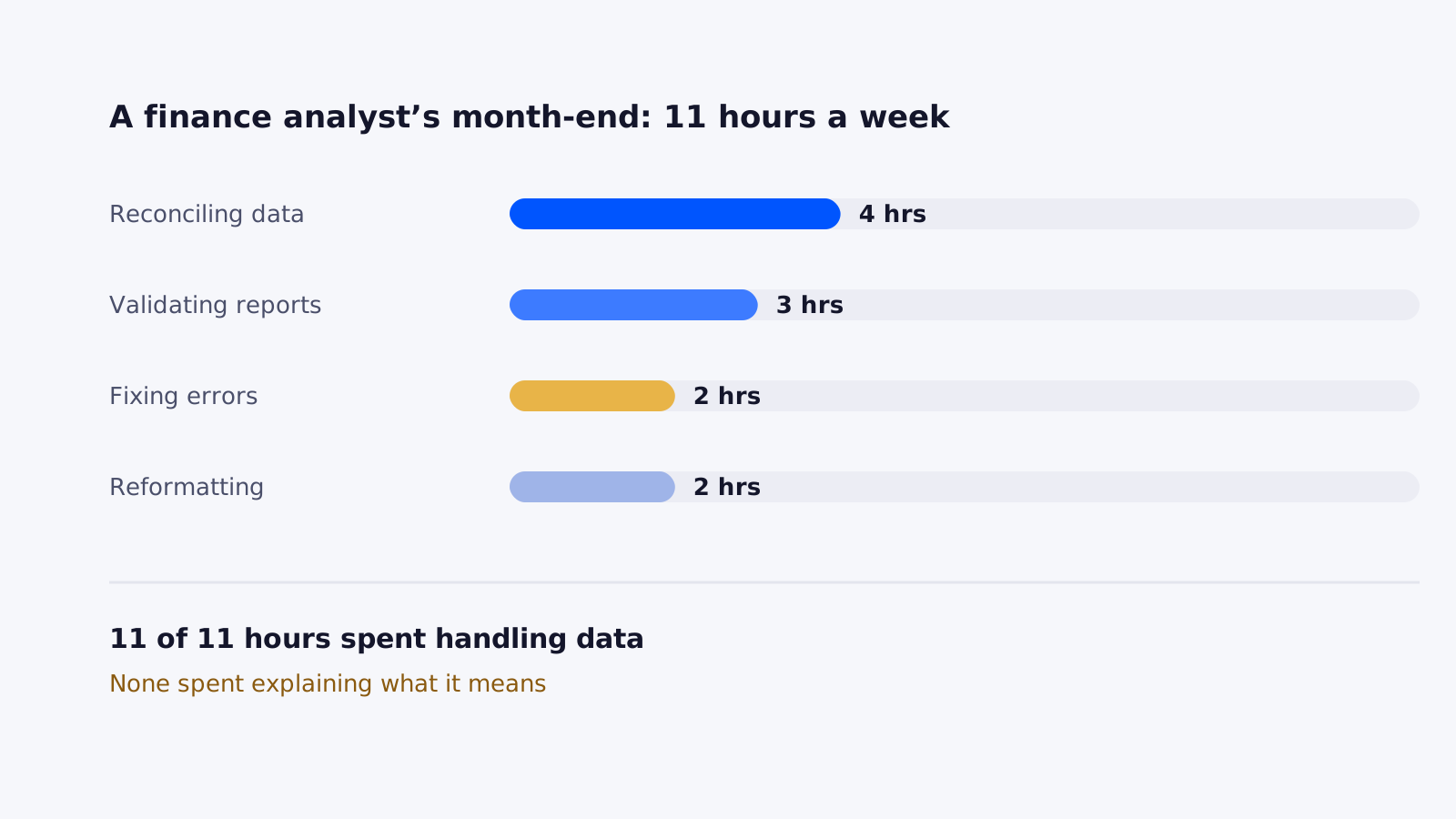
The “11-hour week.” A finance team we worked with had their analyst spending 4 hours reconciling data, 3 hours validating reports, 2 hours fixing errors and 2 hours explaining inconsistencies. That’s 11 hours — gone. Not on analysis or insight, but on just maintaining the process.
Why is this a bigger problem than it looks?
Because it’s not just time. It’s lost productivity, reduced job satisfaction, increased burnout — and ultimately weaker decision-making.
How do you reduce manual finance processes in practice?
Reducing manual work isn’t about telling your team to work faster — it’s about redesigning how the work gets done.
Step 1: identify hidden manual work
Most manual work isn’t obvious — it sits inside spreadsheet checks, data validation steps and “quick fixes” that happen every month. Ask your team: what do you repeat every month? What takes longer than it should? What breaks most often?
Step 2: prioritise what to fix first
Not all manual work is equal. Focus on tasks that are repetitive, time-consuming and prone to error — typically reconciliations, data consolidation and report preparation.
Step 3: replace manual steps with automation
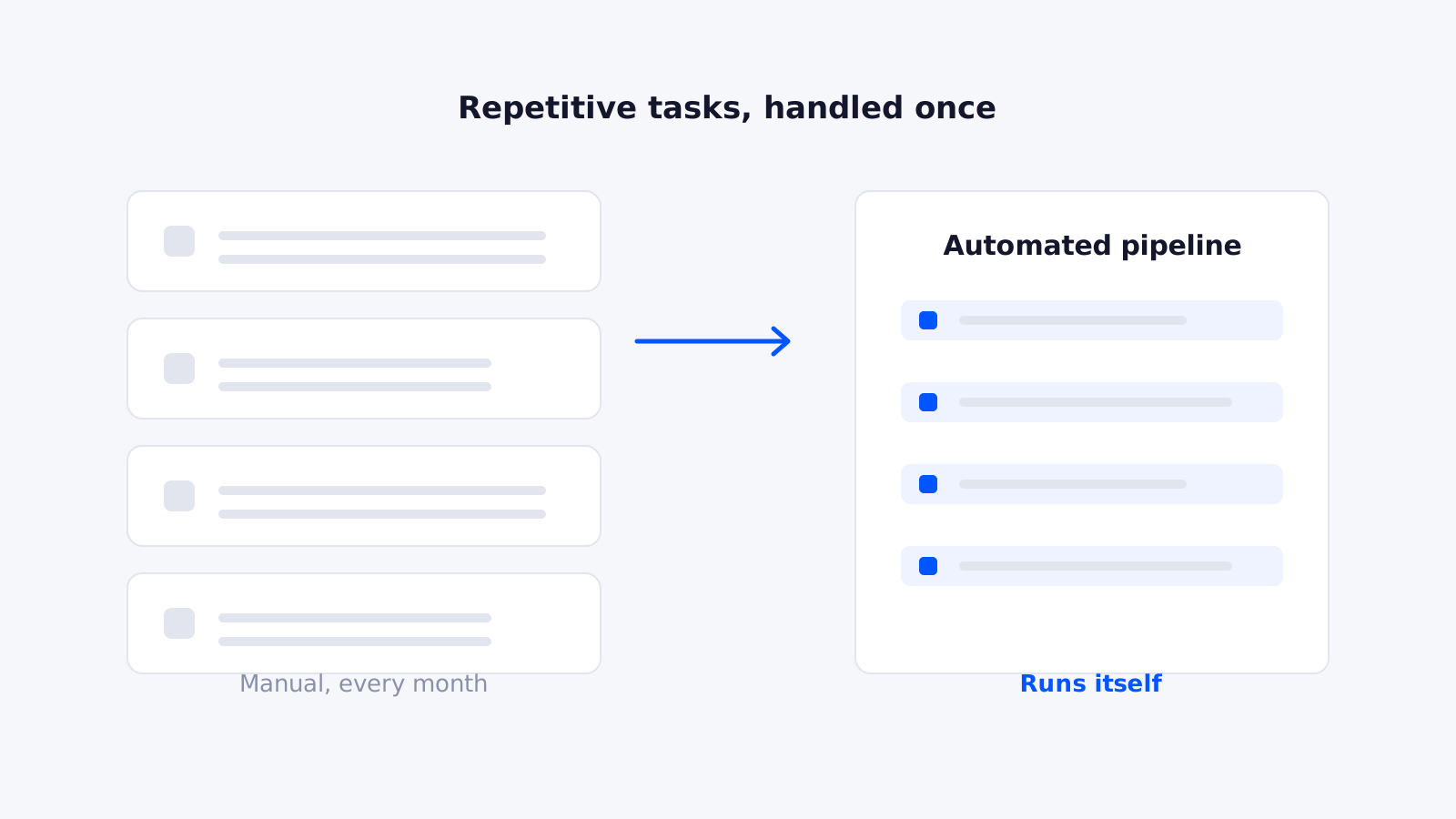
Automation doesn’t mean removing people — it means letting your skilled team do what they’re good at. Data extraction can be automated, reports can update automatically and reconciliations can be system-driven.
Step 4: connect fragmented systems
A huge amount of manual work exists because systems don’t talk to each other, so teams act as the connector. Integrating your ERP, operational systems and reporting tools removes the need for manual stitching.
Step 5: shift the team from processing to analysing
This is the real transformation. When manual work is reduced, analysts stop being data handlers, controllers focus on insight rather than checks, and finance leaders get faster, clearer answers — finance becomes a strategic function, not just a reporting one.
Key takeaways
- Manual finance processes are the biggest hidden time drain.
- Most lost time comes from reconciliation and validation.
- Automation frees teams to focus on insight, not data.
FAQs
What are manual finance processes?
Tasks like reconciliation, data entry and report preparation done manually.
Why are manual processes a problem?
They consume time, increase errors and reduce efficiency.
How can manual processes be reduced?
Through automation, system integration and process standardisation.
Ready to trust your numbers again?
Book a free 30-minute call and we’ll talk through your current reporting and what’s possible.